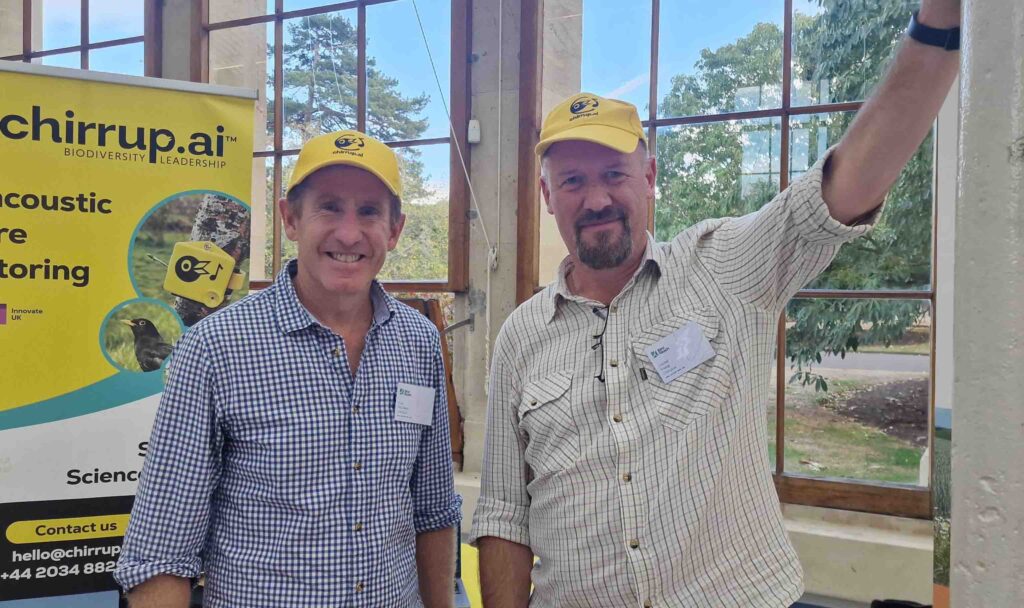
On 15th October, Craig and Conrad joined scientists, financiers, farmers and restoration practitioners at the inaugural Kew Reach Solutions Summit, held in the Nash Conservatory at the Royal Botanic Gardens, Kew. It was a day of honest, wide-ranging conversation about what nature recovery actually takes.
Outcomes over actions
Farming ran through almost every discussion. Craig Livingstone of Lockerley Estate made a point that stayed with us: public funding should reward environmental outcomes, not just the actions taken. As the Kew Reach write-up put it, the right data and analysis can help target interventions that give meaningful livelihoods to farmers while supporting nature on a payment-for-outcomes basis. It is a shift in thinking that the sector needs to make, and it requires measurement that holds up.
The financing gap
Alice Stuart’s contribution on nature finance was sobering. Of the £1.15bn flowing into UK nature recovery, the vast majority still comes from public sources. Private capital remains a small fraction of the total. Closing that gap depends on demonstrating measurable, credible outcomes – something the sector has historically struggled to provide. Without that evidence base, neither government nor investors can act with the confidence nature recovery requires.
Making every hectare sing
Kew Reach Chair Mike Maunder framed the challenge plainly: “We need to look at every hectare and ask, how do we make that sing?”
That is the question we wake up to every morning, and the reason we built our new Biodiversity Index Dashboard, which we presented at the Summit’s innovation showcase alongside the University of Plymouth, Arboris and Greehill. The Dashboard is designed to make nature recovery visible, trackable and ultimately more investable. More about this very soon!
Thank you to Mark Chadwick and the whole Kew Reach team for building a community that takes these questions seriously. We look forward to the next one.